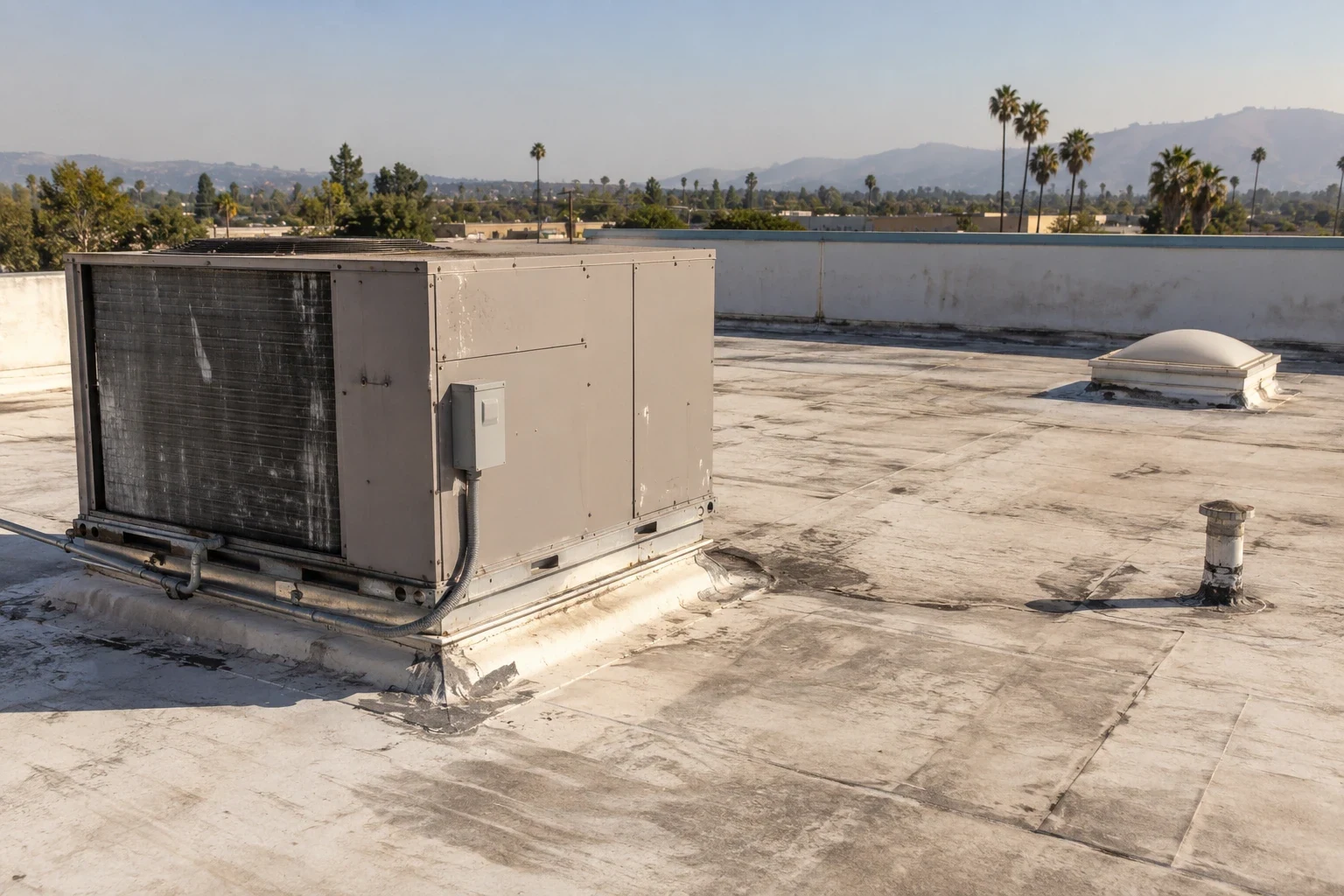
Which observations distinguish a local leak from a larger failure?
We trace the reported water path through membrane seams, laps, wall terminations, penetrations, drain bowls, scuppers, and earlier repairs. Because an interior stain can sit away from the entry point, the inspection checks the roof above and around the affected space. If several layers conceal the substrate, the report notes the limit of visual inspection and whether an authorized test opening could change the estimate. Where moisture has reached insulation or deck, a new surface patch will not restore the assembly. Photos and measurements show the condition before the removal line is set.
Before repair, we identify the installed membrane or metal system and follow its compatible seam, flashing, and attachment details. TPO, PVC, EPDM, modified bitumen, built-up, and metal roofs each need different preparation. A drone roof inspection can document accessible surface conditions; close inspection and approved testing answer concealed questions. The owner receives observed conditions separately from any allowance for material beneath the field sheet, so confirmed work and uncertain layers are not combined.
What does a durable repair include beyond the patch?
A repair should remove the failed connection and restore the surrounding assembly. We cut back loose membrane or flashing, prepare a clean and dry substrate, and install compatible material with an edge that can be examined. Thermoplastic seams need a proper weld; EPDM uses different patch preparation; metal roofing requires its own review of fasteners, panel laps, closures, and flashing. The repair boundary expands if deterioration continues beneath adjacent material. The scope notes whether insulation, cover board, or deck correction is included, so those tasks are not left between trades.
At a wall, the termination and counterflashing must remain secure. At a curb, the metal flange and membrane tie together around the opening. If a drain is involved, we inspect the flange and path into the outlet rather than only removing debris. A seam-failure repair should match the membrane and the failed seam; a drain correction must leave runoff a clear path. We photograph the finished detail and record any remaining limit. The owner can review what was permanently corrected and what was only protected pending access, testing, or another trade's work.
When is a broader roof scope the better construction choice?
When leaks recur across roof areas, review the full assembly before funding another series of isolated patches. We compare moisture extent, deck and attachment condition, drainage performance, and perimeter transitions to determine whether localized work remains practical or whether reroofing should be priced. A recover is appropriate only when the retained layers are dry and stable enough to support another system. If water is trapped below the surface, a new roof can conceal rather than correct the failure.
Price the proposed assembly by layer, starting with what must be stripped, what can remain, and which lower materials need replacement. Include tie-ins at drains, rooftop curbs, roof edges, and walls, then state how each work zone will be closed at the end of the shift. A commercial replacement may require removal to deck or a defined portion of the existing system. A recover option uses a different preparation plan and should follow an inspection of existing materials. If the building team is comparing nearby properties, Concord and Martinez need separate reports because findings cannot transfer from one roof to another.
How do the GC and roofer keep the work sequence intact?
Before mobilization, confirm the roof access point, staging space, lift or crane needs, occupied entrances, and the hours available for loud work. We divide the surface into areas the crew can prepare and close within the planned shift. If HVAC, electrical, or plumbing work touches a curb or penetration, the responsible trade confirms dimensions and timing before flashing begins. A daily water stop protects the open edge. The plan names who controls the opening, who completes the equipment work, and who verifies the final membrane connection.
Pacheco's location between Martinez, Concord, and Pleasant Hill helps the team identify the service area; roof access and staging still depend on the individual property. The general contractor confirms truck routes, roof loading limits, and material storage before delivery. For occupied work, interior protection and tenant notices belong in the same schedule as tear-off and close-in. A phased reroof sequence can separate work zones and show which rooms or operations are affected each day. Keep the closeout record with the work order so a later trade can see where the roof was opened and repaired.
What records make the next repair easier to scope?
Keep photographs of the repair, an updated roof plan, the materials installed, and a list of penetrations added after turnover. These records help the next service team distinguish an old seam from later mechanical work. Maintenance visits check drains, laps, edge attachment, curb flanges, and the locations where water entered previously. Pacheco's warm, dry summers describe a seasonal condition, but the actual roof surface still needs inspection after rooftop work, debris accumulation, or a reported leak. The record should list inaccessible areas and any test not completed.
We can sort findings into immediate repairs, scheduled work, and monitoring, with a reason for each recommendation. That gives the owner a usable basis for approving work without mixing a small water stop with full replacement. A separate roof in Antioch should have its own conditions and project schedule, even when the same property manager oversees both. For Pacheco, provide the access contact and any work completed by other trades since the last inspection. The next visit can then focus on changed details, drainage, and the integrity of the repair boundary.
Commercial Roofing Questions
What should the owner provide before an emergency roof visit?
Share the affected area, site contact, access instructions, known roof system, and any recent equipment or repair work. Those details help the crew plan safe access and protect the opening while the permanent scope is confirmed.
How do you locate the source if water shows inside far from the roof defect?
We inspect the likely path through seams, drains, walls, and penetrations, then compare roof conditions with interior observations. Testing may be needed to confirm concealed layers.
What should a Pacheco repair proposal identify?
It should define the removal line, compatible repair detail, any insulation or deck work, access needs, daily dry-in, and the trades responsible for equipment or openings.
Can the roof stay in service during a replacement?
The schedule can divide work into protected sections, with operations and interior areas reviewed before removal. We plan a closure point for each shift and note required access limits.
What makes a recover different from a replacement?
A recover leaves suitable existing layers in place and adds a system above them. Replacement removes some or all existing material. Inspection must confirm moisture, deck, and drainage first.
Related Roofing Work